To Be or Not to Be – AIADMK supporters dwindle between the alliance and their loyalty

-Aishwaryaa. R

“My vote is for the AIADMK till the end, no matter who runs it!” said Pushpavalli, the Assistant Head of the Women’s Organisation of the AIADMK party until late 1980s.

With the alliance of BJP (Bharathiya Janata Party)and PMK (Pattali Makkal Katchi) with the AIADMK party, the people of Saidapet and Kotturpuram, one of the main areas for the party expressed mixed opinions about voting.

Pushpavalli, showing her tattoo of the AIADMK’s two leaves on her right hand, said that the governance is not as efficient or strong after the former Chief Minister and AIADMK Head, Amma i.e J.Jayalalitha’s demise. She lives in Kavangarai, a thin strip of settlements across the Adyar river canal in Saidapet.

“She was the last dynamic leader. She never let any national party come in the way of Dravidian principles. Now it’s all dependant on other parties to uphold their stand in the [Legislative] Assembly,” she said. Yet Pushpavalli remains loyal only to the AIADMK. “It’s for M.G.R and Amma. Not for anybody else,” she said.

N. Sathya Moorthy, a senior political analyst said “In most elections over the past 25 years, PMK has registered a decisive five per cent vote-share. However PMK’s presence is confined mostly to only the northern and parts of the Western districts, where it could be around a higher 8 per cent in those parts. In the 2016 assembly poll, the victorious AIADMK’s vote-share was just one per cent more than that of the DMK combine, divided 41-40 per cent across the state. That makes every additional vote important for both Dravidian majors now.”

M.Kumar, an auto driver in Royapettah says “Things are about to change in a big way. Everyday there is a news saying there is some compensation for the farmers, the fishermen, the elderly and the disabled. But none of these were to be heard in the past two years. The Budget release listed many funds allocated for the economically weaker section, but none is either properly comprehendible or approachable. The corporation elections are held. Their budget is also not released. Now we have a national party and a casteist party as a part of the alliance. At least the DMK shows clear principles. I have decided to change sides this time, just to drive on better roads.”

Sathya Moorthy said that AIADMK cannot expect a clear victory with the PMK’s Vanniyar community support since it also depends on the consolidation of anti-BJP minority votes in favour of the rival alliance, possible ‘backlash’ of ‘soft Hindutva’ and Dhinakaran’s ability to split AIADMK votes, among others.

Although the major parties of Tamil Nadu have always been the AIADMK and the DMK, this election also sees new factors such as T.T.V. Dhinakaran’s AMMK (Amma Makkal Munnetra Kazhagam) and Captain Vijaykanth’s DMDK (Desiya Murpokku Dravida Kazhagam).

Vasanthi, a flower seller in Teynampet says “I do not understand why [AI]ADMK would join with BJP and PMK? Its better I vote for TTV [Dhinakaran] or Captain [Vijaykanth] this time. I know both of them are not the best suited candidates. But at least they are not BJP.”

AIADMK’s alliance, even it has gained a few extra hands in areas like Nagarcoil, Kanniyakumari and Madurai, it still has disappointed a few supporters of its own party. Yet, the loyalty of many others seem to keep their position stable.

Perfect mix of sweet and salt

Abhinaya Harigovind

Feb 21, Chennai: Residents of the Lala Gunda area in Old Washermenpet are no help in locating the treasure in their vicinity. A shrug and “they are everywhere” is the most you will get by way of direction. When their neighbours have been manufacturing butter biscuits for generations now, it hardly counts as treasure.

If you follow your nose, you can sniff your way through the maze of alleys to the butter biscuit factories of Lala Gunda in Old Washermanpet. The golden brown, sweet-salt biscuits that are a fixture at every tea shop in the city, are manufactured in thousands at each of these bakeries.

“We don’t keep count of how many biscuits we bake in a day,” says 33-year-old Jawahar Sathi who owns SP Bakery. “There are roughly 150 biscuits in each batch that goes into the oven, but we don’t keep count of the batches,” he says, removing trays of perfectly round baked cookies from a rack that has just been removed from the oven.

A stack of freshly baked biscuits at SP Bakery. | Deepti Sri

According to him, SP Bakery is one of the smallest in the area. The entire baking process is completed in a single room and the only machine they have is the oven. They supply biscuits to around 60 tea shops in Chennai.

While 44-year-old H Sardar cuts the dough with a circular mould, he says, “Biscuits are priced between Re 1 and Rs 5 with the smallest one being the
cheapest, though they all taste the same.” The top surface of each biscuit is emblazoned with the name of the bakery.

A little distance away, MS Bakery is bigger both in terms of the space, the machinery they use to bake and the number of tea stalls they supply. Thirty-seven-year-old Habibullah says that they supply around 500 tea stalls in Chennai and in nearby Pondicherry and Coimbatore.

He has recently bought a wire cutter to cut the dough into circles for Rs 8 lakhs. “We also bought a mixer last year to knead the dough. Earlier, men would knead and cut the dough. Bigger bakeries choose to use machines now,” he says. MS Bakery employs 30 workers, including women who work at the back of the room to pack the biscuits. Men work the machines.


The 25-year-old bakery has been moving from one street to another in Old Washermenpet for the last few years. “The bakeries here keep moving from building to building, but in the same area, depending on rent and how willing the owner is to let us rent the space for longer,” says Habibullah. His older brother has recently taken over the business from his father.

Both Habibullah and Jawahar concurred that the business has been steady for many years. “Apart from Chennai, we also sell biscuits to suppliers in Andhra Pradesh and nearby areas in Tamil Nadu. So the demand is consistent,” Habibullah says.

According to S Surendran, Secretary of the Chennai Metropolitan Tea Shop Owners’ Association, there are around 5000 licensed tea stalls in the city. “In 2014, the Corporation decided that they would issue trade licenses in a day. Now that people get the licenses easily, the number of unlicensed tea stalls has been falling over the years and more people are entering the business. The Corporation claims that 3000 new tea stalls have got their licenses since 2014,” he says.

The prices at these tea stalls cannot be raised beyond a point since people are counting on these places being cheap, he says. He attributes the consistency in demand to the prices. “But now that big companies like Britannia are making smaller, cheaper packets of biscuits, the demand for the butter biscuits has been falling in the city. Some of these bakeries would have shut down over the years because they cannot hike their prices too much,” he says.

“People buy these biscuits more out of habit than anything else. It becomes a routine to buy the butter biscuit with tea and this is what sustains the business,” he says.

Armugham, who works at a tea stall in Taramani, sells around 50 locally made biscuits in a day. He stocks different varieties of these biscuits in glass jars and does not sell any of the big brands that come in packets. “These are cheaper for me to stock than the branded packets of biscuits,” he says. He collects the butter biscuits from Old Washermanpet around once a week.

The smell of the biscuits lingers well past the bylanes of Lala Gunda and follows you out of Old Washermanpet.

Chennai loses their 3rd match, as U Mumba register their 1st win

Aishani Saha

Chennai: U Mumba volley registers their first win in the Rupay Pro Volleyball League as they beat Chennai Spartans 3-2 on Saturday at the Jawaharlal Nehru Indoor Stadium.

As the referee blew the whistle to commence the match, the crowd cheered. The opening set was mainly dominated by the host team Chennai Spartans as they got a lead of 10-8. Canadian star player Rudy Verhoff helped the Spartans to maintain a lead. Spartans take a lead of 13-8 as U Mumba, looking to catch up, called for a super point which meant that the team which wins gets two points.

Wanting to finish the game fast, Spartans called for a Super point but as U Mumba scored the point they were able to get back in the game 13-10. After which there was no looking back for U Mumba. Their captain, Deepesh Kumar Sinha with powerful serves was able to bring the score to 14-14. The visitors, keeping their nerve, were able to win the first set of the match.

U Mumba seemed to carry out the same temperament into the second set as they got a lead of 5-1. Canadian star Rudy tried to get the scores level, but the lead kept increasing as DNK Venkatesh, the libero (a player who specialises in defending and isn’t allowed to block or attack) of the U Mumba team dived almost near the free zone to get to the ball. 

With few technical errors from U Mumba, Chennai was almost closing in on the 7-11. But again minute error like smashing outside the court, or hitting the ball more than three times made it impossible for the Chennai Spartans to get into the game as they lost the second set 8-14.

Spartans had the third set to keep the match alive, so they needed to win this. The third set was fought to tooth and nail by both teams. With few smashes from Spartan’s Naveen Raja Jacob and Sorokins, they were almost able to level the score to 9-10. But then high end blocks from U Mumba captain Deepesh and Saqlain Tariq setting up the ball for the attackers to smash, U Mumba cruised to victory in the third set as well.

Chennai had lost the match, but there were two more sets to go so they had to play for their pride. On one hand, U Mumba took the fourth and the fifth set easy as they tried different combinations of players, by changing positions and substituting players. On the other hand, Spartans were full of energy.

As Chennai team captain Shelton Moses and V Hariharan blocked and set the ball, Rudy beautifully placed the ball onto the opponent’s court. The Spartans had won the last two sets.

Though Chennai won the last two sets, U Mumba had won the match as 3-2 was the score. By winning the last two sets they infused more energy into the Chennai supporters.

Mani, a teacher, who came to watch the match with his friends said, “It doesn’t matter they lost the match, they will come back stronger in the next match and will qualify for the playoffs.”

Cricket and Football are the sports that are mainly in the limelight in India. But after sports like Kabaddi, Badminton and now Volleyball is becoming popular through these leagues sponsored by corporates.

“This is the first time I am watching a volleyball match, I am surprised that people have come in such huge numbers to support the home team,” said S Sathish, a professional footballer.

Ajit Singh, a professional volleyball player who represents Jharkhand in state level tournaments said, “Due to the Rupay Pro Volleyball League, the popularity of volleyball will definitely increase.”

He further added, “In our country it’s either football or cricket, but leagues like this would give an opportunity to those who play these underrated sports like volleyball or throwball.”

K.C. Vijay Kumar, Sports Editor of The Hindu said, “Commercialisation of sports is a positive thing with necessary evils.”

“The money that the corporates pay goes to the grassroots, so, for example, somebody in a rural area might get placed because the talent scouts are sent there as the demands keep rising, ” said Kumar.

U Mumba’s libero Venkatesh dives to defend as Chennai Spartans Rudy smashes the ball. | Aishani Saha

Robot Theme Restaurant launches outlet in Porur

By: Ashmita Mukherjee

Chennai, Feb 15: Restaurant with robots as servers has opened its second outlet in Porur to meet the growing demand and interest of citizens.

Robot Theme Restaurant is India’s first restaurant running with robots assigned as servers. It’s a Pan Asian restaurant located at Chennai and Coimbatore. The brainchild of Venkatesh Rajendran, a restaurateur, and Karthik Kannan, an architect, its base branch is located in Semmencheri which began business in 2018. The branches in Porur and Coimbatore are franchise outlets.

Robots designed in all white with blue patterns resembling a dress, glide through the restaurant on wheels. Their structure is feminine with slender limbs. Customers order food through a tab and the kitchen team is informed of the order. The robots then fetch food from the kitchen before delivering to the right table.

The restaurant chain is already working on the blueprint for a branch in Bangalore this year. According to Kailash Sundarrajan, the general manager of Porur branch,

“It takes 45 days to import robots because of customs. There are specific codes for import of robots which were an initial hassle for the owners. So we need about 90 days to start a branch in Bangalore. The restaurant chain also plans to open shop in six more cities in the near future.”

Restaurant staffs have been trained by the robot manufacturing company’s personnel on how to operate the machines and implement them effectively.

According to the general manager, there are six robots working as servers and one robot working as a receptionist. The serving robots stand at a height of 5.5 feet whereas the receptionist robot is only five feet but is a more advanced model. Every robot has sensors on its hands and at its base. The robots can detect movement or any presence near them. They speak English and can ask people to move aside from their pathway and announce arrival of food at designated booths. The robots run along a magnetic strip under the vinyl cover on the floor to stay on route while serving.

The general manager added,

“The receptionist robot is equipped with image mapping that helps it to navigate its way avoiding obstructions in its path. It has facial recognition software that helps it to remember the face and name of a customer and greet the customer when they revisit. The receptionist robot can also escort guests to booths, bathroom and the selfie point for taking pictures with it. The robots have no sharp edge so are safe around children. Children visiting the restaurant often in excitement push a robot off its magnetic strip path but the robot is able to recourse its trail.”

The robots run on android software manufactured in China. The robots do not need any large part replacements for any malfunction. Only the motherboard that runs the robot requires tweaking or replacement. The robots can be in use for a day’s worth of work before they need to be plugged in at the charging station like any other batter operated machine. Robots and their parts are all imported from China.


Battling hunger in Triplicane

Featured image credits: The Hindu

Abhinaya Harigovind

Chennai, Feb 14: Two months after Altaf Ahmad began distributing food to the needy in Triplicane, he has realised that battling hunger, even in a single area, is a tall order.

What began as an informal arrangement to distribute breakfast occasionally to the poor in the locality has now become Triplicane’s Food Bank. Altaf and his team of ten volunteers collect, pack and distribute the food.

“Most of the food comes from wedding halls and celebrations like birthdays,” said Altaf, who is a retired real estate agent. “We have asked the halls nearby to let us know if they have food left over. Almost always there is a lot of food left from every wedding.” A few weeks ago, they received 25 kg of biryani left over from a wedding.

Food Bank volunteers are spread across the city and sometimes collect food from wedding halls in Pallavaram and Tambaram as well. “We get calls at around 12 a.m. informing us that there is food left over from a celebration. But ten people across the city is hardly enough. We end up going from one end of the city to another to pick up food since we don’t have volunteers in every area,” Altaf said.

They usually prepare breakfast at their office in Triplicane out of the donations they get. Lunch and dinner are distributed out of the food they collect. Their office is equipped with a fridge. “People who know about us in the area come to leave and take food from the fridge,” Altaf said. “Sometimes, children come asking for food for their entire family.”

When they began, Altaf and his volunteers would distribute food to the homeless on pavements and outside temples and the Triplicane railway station. Now, apart from the homeless, they have also identified other needy families in the area.

“We did a survey last month where we identified around 37 families in Triplicane and adjoining Royapettah. The people we found to be most in need were widows, differently-abled people, the old and the sick, and famlies in which the adults have not been able to find and keep regular jobs,” he said. They take packed food to the houses they have identified at least once every day. Sometimes, they distribute rations like rice and sugar that they receive through donors.

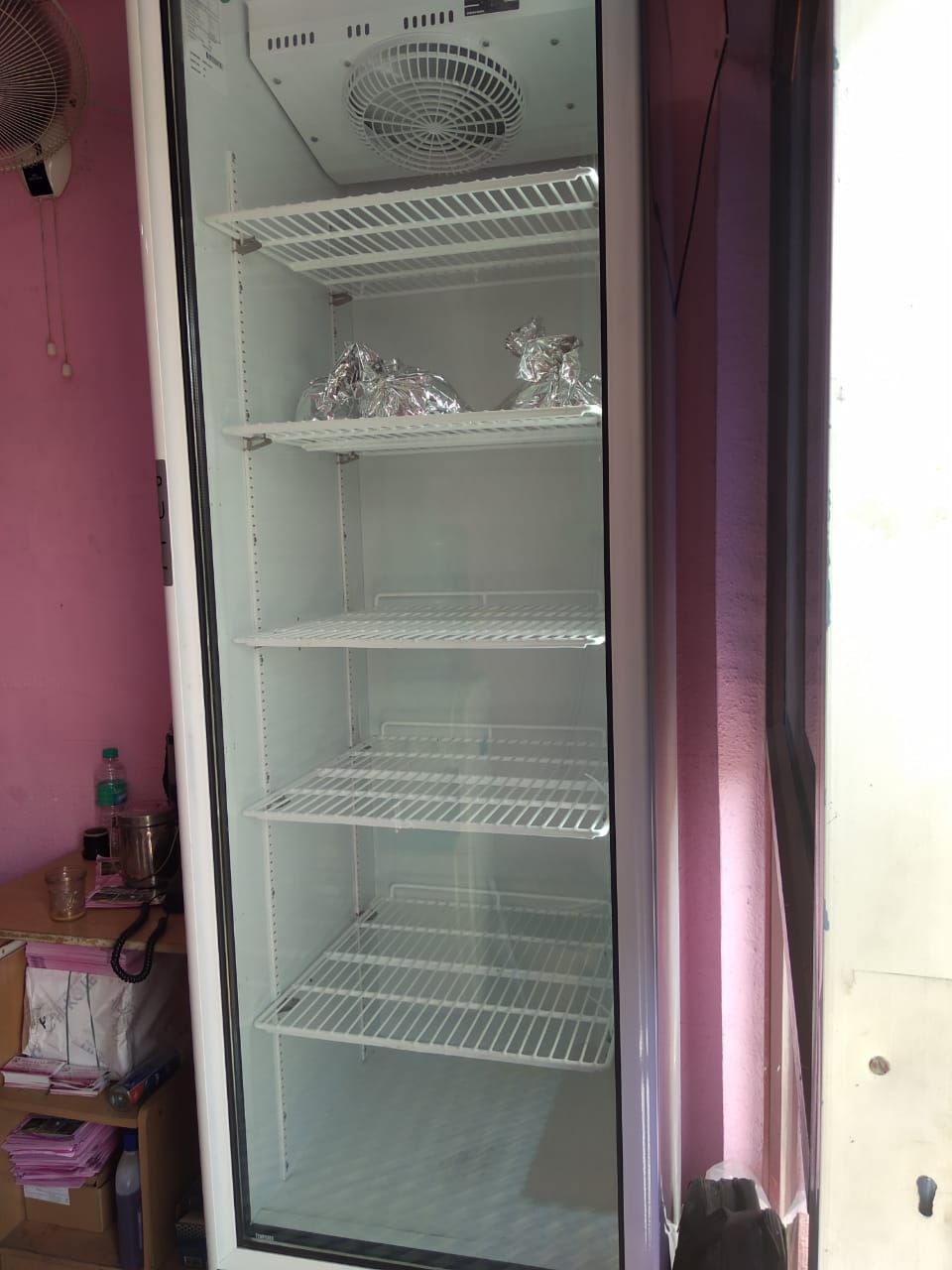
The previous night’s food has been distributed and the Food Bank fridge lies empty till the next donation. | Abhinaya

Altaf hopes to extend the Food Bank to more areas. “When we started the project, we didn’t realise how many families go to bed hungry. There are so many that we are unable to serve now because we don’t have enough volunteers or funds,” he said. 

Last night, the Food Bank received a call at 11 p.m. requesting that extra food be picked up from a wedding hall in the area. Altaf has just finished packing and distributing what they had collected. “There is a little bit left over in the fridge to distribute for dinner. Once you know that so many of your neighbours do not have enough to eat, it is difficult to stop this work, or even stop thinking about it,” he said.

Inclusive fashion in the city

By MANJIRI CHITRE

Jabez Kelly, Founder of Diversita | Self-time picture by Jabez Kelly

CHENNAI: The city is set to host its second body positive fashion show in April, with the lineup including people from the queer community, and people of all sizes. The show is one of a kind as it also includes the participation of the differently-abled this year.

Diversità, a multicultural fashion show is a brainchild of Jabez Kelly, a drag queen based out of Chennai. Started in 2018, this is the city’s first fashion show that saw models of all sizes, colours, genders, and sexualities. Garments reflecting contemporary Indian wear of eight upcoming Chennai-based designers will be showcased in the show.

On October 20, 2018, Diversita had hosted a gender inclusive and body positive fashion show which showcased local designers from Chennai. According to Kelly, models of all sizes walked the ramp, along with people from the LGBTQ community. This year the show will have disabled models walking the ramp. “Our main aim to spread gender inclusivity and body positivity through our shows,” said Jabez Kelly, founder of Diversita. He further mentioned that the theme of the show cannot be revealed as it has not launched yet.

According to sources, funds for this year’s show will be raised for the ‘Pink People’ organization, which works for the LGBTQ community.

Last year, the show had seen around 60 models walking the ramp. Although his year, Kelly is expecting at least 100 to 125 models, out of which around 10 will be disabled models. Speaking to the models, Akku George (31), said, “For me, it is a very uplifting feeling to be able to stand there, in front of a crowd, and actually feel good about yourself. That is what I look forward to. It is a different form of beauty other than what is perceived in the world.”

Another model, Abhishek Reddy (33), who was a Show Stopper of Diversita, 2018, said, “It is a common misconception for a lot of people that models are supposed to be of a certain type. We come in all shapes and sizes. What I love about the show is that it teaches you how to love yourself.”

The theme of the show will be launched in the coming four weeks.

Warriors in pink

DIVYA SETHU

A board at the KMC Breast Cancer Clinic

Chennai, Jan 31: More than 300 cases have been detected at the Kilpauk Medical College Breast Cancer Clinic at Kilpauk Medical College Hospital here, since its inception on January 3.

The one-stop clinic for breast cancer screening was inaugurated at KMC Hospital by Health Minister C Vijayabasker.

Dr. Sumeena, Assistant Professor at the college and Assistant to the Head of Radiology Department says, “The hospital always had mammography centre, but we decided that a clinic was needed after realizing that women often come in too late. They only come in when the lesions have turned painful, and most times, by then the cancer has reached later stages.”

For this, she says that the clinic is equipped with extremely high end machinery, which is the first of its kind in the country. “We have machines that can do stereotactic biopsy, 3D tomosynthesis and a mammography all in one.” Says Dr. Sumeena. “These machines can pick up micro calcifications, which pose a high risk for cancer, in the breasts. Even the smallest lesions can easily be picked up by these machines. An ultrasound usually can only pick up visible lesions, but with this machinery, we can pick up small and almost invisible ones as well.”

The interiors of the clinic are mostly pink

The hospital also conducts contrast mammography, which involves injected a certain dye in the veins of the breast. This dye picks up the patterns of the lesions to reveal them, and is picked up by any cancer tissues, if present.

Almost 70 per cent of the women who come in are from rural areas, says Dr. Sumeena. If they hold a CMCHIS card, their screening is free. “Most women are shy about getting breasts examined, and don’t realize or know how common breast cancer is. They often ignore lesions as well, due to lack of awareness.”

However, the clinic has had around 800 patients since it started. “The idea was to bring in many more women, and it seems to be working,” she says.

The clinic currently employees four doctors from the hospital, all of them being women. Dr. Sumeena says that as students from the college are completing their postgraduate degrees, more women are eager to join the clinic and begin working there.

While the rest of the hospital is white, and almost washed out, the clinic stands out, painted in bright pink from wall to roof. The interiors, including tables, chairs and doors, are all pink as well.

Home Again

DIVYA SETHU

Women in the neighbourhood set up by The Banyan | Credits: The Banyan

Chennai, Feb 7: The Banyan, a Chennai-based NGO that focuses on mental healthcare, has initiated a programme named ‘Home Again’, which aims to integrate women with mental health issues back into society.

These women have been shunned from their houses, and the NGO’s attempts to contact their families have been in vain; their families are either untraceable or do not want them.

“The idea came about,” says Mrinalini Ravi, a Junior Research Associate at the NGO, “when we asked these women, whose mental health seemed to be getting no better, whether they wanted to stay at the institution or try to move back into society. Most women wanted the latter.”

These women then formed affinity groups. The Banyan provided them with homes, where four to five women live as ‘family’. Three mental health professionals were put in charge of them; a programme manager, a case manager and a nurse. Fifteen women from the community also volunteered to help out as personal assistants.

These assistants are in charge of things like timely medication, upkeep of appointments with psychiatrists, and ensuring the availability of basic amenities like water, gas etc.

“We saw the mental health of these women gradually improve,” says Mrinalini. “The curiosity of the neighbourhood women peaked, and they eventually came to get to know these women.”

The neighbourhood became more accepting of these women. The women are ecstatic about their new-found freedom, and some have even taken up jobs in nearby homes and shops. Others help raise farm animals, babysit for other families or just remain idle.

Researchers of The Banyan Academy of Leadership in Mental Health (BALM) found that social acceptance resulted in significant improvement of mental health of women. 

The project is funded by The Hans Foundation and Grand Challenges of Canada, a non-profit organization that funds many NGOs around the world.

2 suicides in a row; IIT-M hostels turn into morgues

Two students ended their life on campus | The Financial Express

HIMANSHI LOHCHAB

Chennai, Jan 31: Two students of Indian Institute of Technology Madras (IIT-M) namely Ranjana Kumari (25) and Gopal Babu (23) committed suicide in their hostel rooms this month.

According to media reports, Ranjana Kumari, pursuing Ph.d in Metallurgy was found hanging in her room on 1st January, two days after she went missing. Gopal Babu, a final year M.tech student also hanged himself on Monday fearing poor results in his 8th semester examinations.

“The environment is so depressing here. Due to pressure of assignments, marks and placements, students get no time to socialise. These single sharing hostel rooms are a big hurdle. Nobody knew Ranjana had been hanging for two days,” said an engineering student from IIT-M requested anonymity.

“Our entire life has been a pressure cooker. First it was coaching for the entrance and now after somehow getting here we have to deal with adamant professors and cut throat competition. There is a limit up to which one can tolerate this. When the limit exceeds tolerance limits, the student decides to end his life,” said another student.

To deal with rising number of suicides, IIT-M introduced MITR or SAATHI helpline for students to share their problems. It also includes professional one-on-one counselling sessions which are kept confidential. Online coaches start sending mails to students a week prior to monthly quizzes. The process helps to boost students’ morale especially during placements. Senior student counsellors are also a part of this activity.

Gopal Babu was also availing personal counselling since a long time.

“To deal with stress and anxiety, emotional intelligence needs to be balanced. Psychological counselling is a gradual process. It is not like a pain killer tablet which can relieve you within seconds. If the depression levels are high, counselling alone cannot suffice to help the patient,” said Dr. Kalpana Suryakumar, a counselling psychologist in Chennai.

“For high pressure institutions like IITs, IIMs (Indian Institute of Management) and NITs (National Institute of Technology), the task is even more difficult because the environment constantly keeps reminding you of the competition. So, there are high chances of students to relapse even if they are attending counselling,” she added.